The trust deficit in digital networking — and how Tap Tap Go earns it back
Introduction
The most connected generation of professionals in history is also the least trusting. LinkedIn counts over one billion members. Digital business cards are distributed by the millions at every major conference. AI-driven outreach floods inboxes before the lanyard is even off. And yet, ask any serious executive or founder how many of their digital connections have translated into relationships that actually moved the needle — the answer is almost always a handful, at best.
The problem was never access. It was confidence. Confidence that the person behind the profile is who they claim to be. Confidence that sharing your contact details won't result in a data breach or a spam cascade. Confidence that a connection request signals genuine intent rather than a harvested lead list.
Professional trust didn't erode because we connected less — it eroded because we connected more, with less meaning. The volume of digital interaction has outpaced the infrastructure designed to make it credible. Rebuilding that infrastructure requires more than a new app. It requires rethinking the entire architecture of how professionals identify, connect, and transact.
Why Digital Networking Broke Trust in the First Place
Professional networking was never frictionless — and that friction was the point. Handing over a business card required physical presence, deliberate intent, and a degree of mutual investment. You had to be in the room. That barrier quietly filtered for seriousness in a way that no digital tool has managed to replicate.
Then came LinkedIn requests from strangers, QR codes on event lanyards, and automated connection campaigns fired at thousands of people simultaneously. The friction vanished — and so did the signal. When anyone can reach anyone with two clicks and a copy-pasted message, the act of reaching out communicates almost nothing about the person doing it.
The data privacy dimension compounded the problem. High-profile breaches — from LinkedIn's 700-million-user data scrape in 2021 to repeated exposure of corporate contact databases — have conditioned professionals to treat every unsolicited digital introduction as a potential liability. Sharing a phone number or personal email now carries genuine hesitation, not just social awkwardness.
Layer on the industrialisation of fake profiles and bot-driven outreach, and the digital handshake has been comprehensively devalued. Studies suggest that nearly 30% of LinkedIn profiles contain falsified or misleading information. Professionals know this. The result is a default posture of scepticism that every legitimate connection now has to overcome before a conversation can even begin.
The analogue business card, for all its limitations, never faced this problem. Receiving one implied a deliberate, human decision to share it. It carried weight — literally and figuratively. Digital networking stripped away that intentionality, flooding professional inboxes with noise and burying genuine, high-value connections beneath it. Rebuilding that signal requires more than a better app. It requires a fundamentally different approach to how trust is established at first contact.
The Identity Layer That Digital Tools Have Been Missing
Trust in networking has always been anchored in one question: is what this person is presenting real? Physical networking answered that question through presence, context, and artefact. Digital networking largely abandoned the question altogether — and professionals noticed.
The foundation of credible identity is not just authenticity; it is intentionality. When someone curates what they share, chooses how they present themselves, and backs that presentation with a tangible object, the signal is clear: this person is serious. That is precisely the gap NFC technology, deployed correctly, is built to close.
Near Field Communication works through an embedded chip inside a physical card that transmits data wirelessly the moment it is tapped against a smartphone. No app download required for the recipient. No QR code to scan, screenshot, and forget. One tap, and the full digital profile transfers — instantly and frictionlessly.
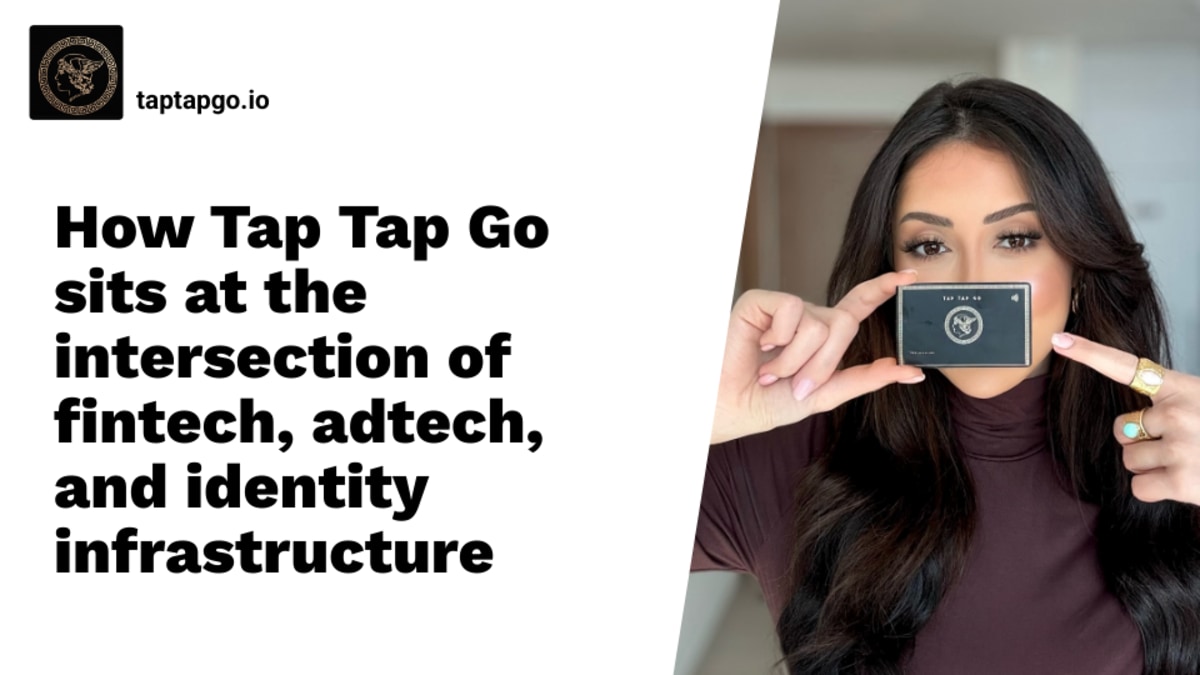
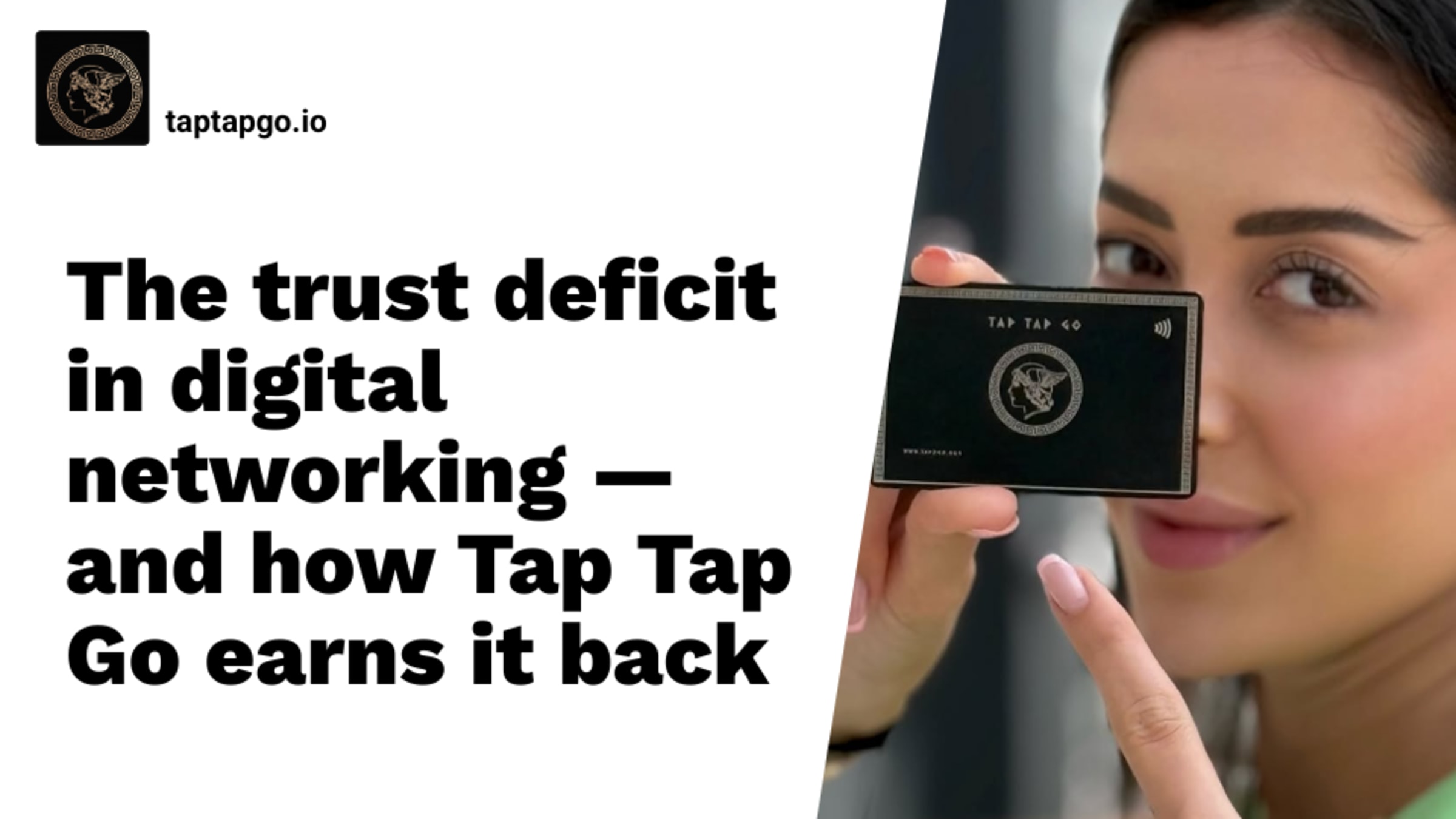
Tap Tap Go's three card tiers — the Gold 24K Carat Crest, the Platinum Prestige with its mirror finish, and the Obsidian Opulence — are not novelties. They are deliberate trust instruments. Holding one communicates something a LinkedIn connection request structurally cannot: that the person behind it has invested in how they show up professionally. Permanence and seriousness have a texture — and these cards deliver it.
The linked profile that transfers with each tap is multi-dimensional by design. Social channels, professional portfolios, and business details are all surfaced in a single, customisable view — giving the recipient a complete, verified picture within seconds of meeting.
Here is the counterintuitive reality: in an era of frictionless digital noise, reintroducing a premium physical object into the networking ritual does not slow the interaction down — it elevates the credibility of everything digital that follows it.
How AI Turns a Single Tap Into a Trusted Relationship
The first tap creates the connection. What happens next determines whether it becomes anything of value. Most professional relationships die in the gap between initial contact and meaningful follow-up — not from lack of intent, but from lack of intelligence. Tap Tap Go's AI layer is built specifically to close that gap.
At live events, Tap Tap Go's AI matchmaking analyses attendee profiles in real time — cross-referencing industry, stated goals, and mutual relevance to surface introductions worth making. Rather than walking a conference floor and hoping to encounter the right person, you arrive already knowing who you should meet and why. The randomness of cold networking is replaced by curated, high-signal introductions.
Every conversation you have is captured through AI-generated meeting summaries, automatically attached to each contact's profile the moment you connect. Context is never lost. When you follow up three weeks later, you are not guessing at what was discussed — you are continuing a documented conversation with precision. That informed follow-up is what separates a trusted relationship from a forgotten exchange.
Timing matters just as much as content. Tap Tap Go's smart re-engagement feature monitors activity signals across your contact network and identifies the optimal moment to reconnect — not a generic thirty-day nudge, but a contextually intelligent prompt triggered by real-world relevance. The difference is material: a well-timed, informed re-engagement converts; a blanket reminder gets ignored.
The actionable takeaway: after your next major conference, resist the impulse to work through 200 new contacts manually. Let the AI assign relationship scores and surface your top 10% — the contacts with the highest mutual potential. Direct your follow-up energy there first. Depth over volume is how a network becomes net worth.
Trust Extends to Transactions: The Go Cash Financial Layer
The trust deficit in professional networking rarely ends at the introduction. The moment a deal is on the table — particularly across borders — a second layer of friction emerges: slow transfers, opaque fees, and financial systems that were not built for the pace of modern business relationships.
Go Cash, Tap Tap Go's integrated financial layer, removes that friction entirely. It operates as a USDT-pegged stablecoin — a digital currency anchored to the US dollar — which means it captures the speed and borderlessness of crypto without the volatility that makes most digital assets unsuitable for business transactions. Transfers are peer-to-peer, zero-fee, and carry no upper limit.
Security is built into every movement of funds. Go Cash's AI fraud detection screens every transaction in real time, a combination of speed and protection that neither traditional banking nor standalone crypto wallets consistently delivers together. This is not background infrastructure — it is an active trust mechanism that professionals can rely on when the stakes are high.
Consider the practical reality: a Dubai-based entrepreneur closes a deal with a London contact met at a conference. A conventional SWIFT transfer would take three to five business days and carry bank fees on both ends. Go Cash settles that same transaction instantly, securely, and at zero cost — from the same platform where the connection was first made.
Then there is the earn-per-tap model. Every tap interaction generates $0.10, projecting $3,600 in annual earnings for active users. Networking has traditionally been a cost centre — time, travel, tools. Tap Tap Go converts that investment into measurable return, and when a platform demonstrably pays back, trust is not just earned. It is compounded.
One Tap. A New Standard for Professional Trust.
The trust deficit in digital networking was never a technology problem — it was an integrity problem. The tools existed, but the signal of genuine intent did not. Tap Tap Go rebuilds that signal from the ground up: a premium NFC card that commands the room, AI that transforms a brief encounter into a documented, prioritised relationship, and Go Cash that settles transactions instantly and securely across borders.
These are not three separate features. They are a unified operating system for the modern professional — one where every interaction carries weight, every follow-up is intelligent, and every connection holds genuine financial and relational value.
The professionals who will lead the next decade are not networking harder. They are networking smarter — with tools that turn intent into income and relationships into results. That is what it means to transform your network into net worth.
A single tap is where it begins. Explore the full ecosystem at taptapgo.io or visit our blog at taptapgo.uk to go deeper.