
The unbundling of LinkedIn: how single-purpose networking tools like Tap Tap Go are winning
LinkedIn has 1 billion members. It is also, quietly, losing the professionals who matter most.
The paradox is not accidental — it is architectural. A platform built to serve every professional use case simultaneously, from job hunting to thought leadership to sales prospecting to genuine relationship building, inevitably serves none of them with precision. The feed that once surfaced high-value introductions now competes with viral opinion posts, unsolicited InMails, and algorithm-driven content optimised for engagement, not outcomes.
The most consequential professional relationships of the next decade will not be formed through a cold connection request. They will be built in context — at summits, in boardrooms, across borders — and sustained by intelligent tools that work as hard after the handshake as before it. The platforms that win will not attempt to replicate LinkedIn's breadth. They will make one thing — meaningful, high-converting professional connection — the entire product. Depth, not coverage, is the new competitive edge.
Why LinkedIn's Breadth Has Become Its Blind Spot
LinkedIn launched in 2003 — before the iPhone, before NFC technology entered mainstream commerce, before AI could analyse a relationship and tell you exactly when to follow up, and long before stablecoins made cross-border payments frictionless. Its architecture solved a 2003 problem: digitising the Rolodex. In 2025, that foundation is showing its age.
The platform now attempts to serve four fundamentally different audiences simultaneously — job seekers, content creators, sales teams, and professionals trying to build meaningful relationships. The result is a cluttered, algorithmically-driven feed that prioritises engagement metrics over genuine connection quality. When a platform tries to be everything to everyone, it earns loyalty from no one.
The signal-to-noise ratio has become untenable for high-performing professionals. Unsolicited InMails from SaaS vendors, viral opinion posts from self-proclaimed thought leaders, and connection requests from strangers with no shared context now compete for the same attention as a potentially career-defining introduction. The infrastructure that was meant to connect professionals is actively burying the interactions that matter most.
This is why executives and founders are migrating their real networking activity elsewhere. The deals that move markets are closed at summits in Dubai, private dinners in Mayfair, and invitation-only conferences in Singapore — not in LinkedIn comment threads. The platform has become a directory. The actual relationship-building happens in the room.
History offers a clear precedent. Craigslist once housed everything from job listings to apartment rentals to personal ads — until Airbnb, Indeed, and Tinder each took one use case and built a superior, purpose-built experience around it. LinkedIn's core functions — contact exchange, professional identity, networking, and financial transactions between professionals — are undergoing the same disaggregation. Purpose-built platforms, engineered for specific, high-value interactions, are already filling the gaps.
The Rise of Context-First Networking — and Why It Converts Better
The most valuable professional connection you will ever make will not come from a cold InMail. It will happen in a hotel lobby in Dubai, at a conference after-party in London, or in the thirty seconds following a keynote that made the entire room lean forward. Context-first networking is the principle that the moment of connection matters as much as the connection itself — and that tools built for the moment will always outperform platforms built for the scroll.
NFC technology makes this tangible. Near Field Communication enables instant contact exchange with a single physical tap — no app download required for the recipient, no QR code to fumble with, no follow-up email that never gets sent. The friction that kills most networking interactions is eliminated at the point of introduction, not days later when the momentum has already faded.
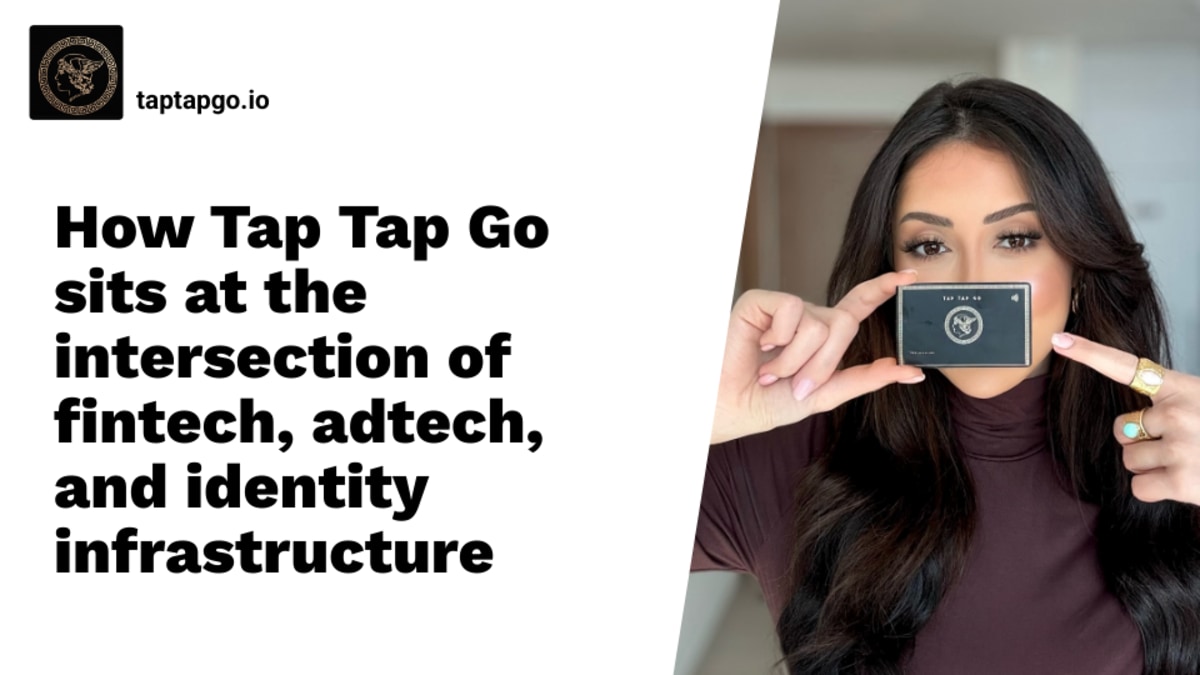
Tap Tap Go's three card tiers — the Gold 24K Carat Crest, Platinum Prestige, and Obsidian Opulence — function as physical-digital bridges. One tap transfers a complete digital profile: social links, business details, portfolio assets, and contact information, all delivered instantly. The card itself signals intent before a word is spoken.
Consider the reality: an entrepreneur at a Dubai investment summit taps their Obsidian card to a venture partner's phone. In under a second, the investor has a fully contextualised professional profile, live portfolio links, and direct contact channels — no business card to lose, no LinkedIn request languishing in a pending queue.
The data supports what every experienced networker already knows intuitively. Warm, in-person introductions convert to sustained professional relationships at significantly higher rates than cold digital outreach. Context-first tools are not a preference — they are a structural advantage.
AI That Works After the Handshake — Not Just During It
The introduction is rarely where professional relationships collapse. The follow-up is. Research suggests professionals lose 60–70% of the potential value from meetings simply because post-event contact management is fragmented, manual, and deprioritised the moment the next calendar commitment lands.
Tap Tap Go's AI addresses this directly. Every interaction captured through the platform auto-generates a meeting summary, attached immediately to the relevant contact profile. No manual note-taking. No reconstructing conversations two days later from a business card and fading memory. Every exchange is documented, contextualised, and actionable from the moment the tap happens.
The platform then monitors activity signals across your contact network and identifies the optimal moment to re-engage — not based on a generic reminder system, but on behavioural data that indicates when a contact is most receptive. The guesswork of follow-up timing is replaced with precision. For executives managing hundreds of relationships across multiple geographies, this is not a convenience feature — it is a structural advantage.
AI matchmaking extends this intelligence upstream, surfacing high-value introductions before, during, and after professional gatherings. The system builds an understanding of your industry, goals, and relationship history, then prioritises who you should meet next — transforming every event from a passive social exercise into a curated pipeline of relevant connections.
For professionals operating across London, Dubai, Singapore, or beyond, Tap Tap Go's profile adaptation layer adds a further dimension: the AI automatically adjusts how your profile is contextualised for different regions, languages, and industries. The same person can present a culturally calibrated professional identity to a Dubai investor and a London VC — without maintaining two separate profiles or diluting their positioning.
The result is a networking intelligence layer that doesn't clock off when the event does.
When Networking Pays — Literally: The Financial Layer LinkedIn Never Built
LinkedIn has always monetised your network on your behalf — selling your attention to advertisers, your data to recruiters, and your connections to sales teams running InMail campaigns. The user builds the network; the platform captures the value. Tap Tap Go inverts this entirely.
Every NFC tap interaction earns the user $0.10. At scale — across conferences, client meetings, and industry events — that compounds to a projected $300 per month and $3,600 per year. Networking stops being a sunk cost and starts functioning as a revenue-generating activity in its own right.
The financial architecture goes deeper than tap-to-earn. Go Cash, Tap Tap Go's USDT-pegged stablecoin, enables zero-fee, zero-limit cross-border transactions between professionals. Paying a Dubai-based contractor, settling a shared London dinner expense, or invoicing an international client becomes a single-tap action — no bank wire delays, no foreign exchange friction, no intermediary fees carving into the transfer.
The integrated digital wallet extends this further, supporting both crypto holdings and NFTs alongside Go Cash. Tap Tap Go is the only networking platform that simultaneously manages your contacts and your capital — two assets that, for most professionals, have always lived in entirely separate ecosystems.
The rewards layer reinforces the same philosophy. Premium lifestyle partnerships — WeWork, the Financial Times, ClassPass, MasterClass, Deliveroo Plus — are embedded directly into the platform. These are not points-for-purchases schemes; they reward engagement and relationship activity, aligning incentives with genuine professional growth.
Your network has always had financial value. Tap Tap Go is simply the first platform built to return that value directly to you.
The Future of Networking Goes Deep, Not Wide
The unbundling of LinkedIn was never really about LinkedIn. It is about a fundamental shift in how ambitious professionals define the ROI of a connection — not by how many they accumulate, but by what those connections actually produce.
Purpose-built platforms that deliver context-first introductions, AI-powered follow-through, and a financial layer that pays you to network are not filling gaps in LinkedIn's product roadmap. They are operating in an entirely different paradigm.
The professionals winning in 2025 are not the ones with the largest networks. They are the ones whose tools convert introductions into outcomes — deals closed, relationships deepened, capital moved without friction.
That is precisely the operating philosophy behind Tap Tap Go: Single Tap, Boundless Connection — and, more importantly, Transform Your Network Into Net Worth.
If you are ready to stop treating networking as a cost and start treating it as a revenue stream, explore the full ecosystem at taptapgo.io, or visit the blog at taptapgo.uk to go deeper.