
The post-app world: why Tap Tap Go is built for a shrinking home-screen
Your brand's app is installed on fewer phones than you think — and opened on even fewer. The average smartphone user has 80+ apps installed but actively uses fewer than 10. The rest sit in folders no one opens, draining nothing except your team's confidence in the roadmap that justified the build budget.
Brands are still pouring capital into app development while users are quietly deleting everything that isn't a utility, a social platform, or a bank. Day-30 retention for most non-utility apps sits below 5%. That is not a content problem or an onboarding UX problem — that is a structural mismatch between how brands think about digital identity and how users actually live on their phones.
The home screen is not coming back.
The brands still anchored to app-first thinking are bleeding funnel conversion at every stage and attributing it to the wrong cause. This is about infrastructure — specifically, where your brand lives when the app is gone and the user still needs to find you.
The Home Screen Is Full — and Your App Didn't Make the Cut
The average smartphone user has 80+ apps installed and actively opens fewer than 10. The rest sit in folders no one touches, quietly draining whatever brand equity the install once represented.
App download rates have plateaued. Retention past day 30 sits under 5% for most non-utility apps — and that number has not improved in three years of industry hand-wringing.
Brands have burned millions building apps that users downloaded once and never reopened.
The shift from app-first to card-first identity is not a trend responding to aesthetics. It is a structural response to a home screen that stopped making room.
What the Post-App World Actually Demands From Brand Infrastructure
Users are not avoiding your app because your UX is bad. They are avoiding it because the download step is a wall — and most will not climb it.
Loyalty programs, memberships, and affiliate identity need a home that is persistent but requires nothing from the user upfront. That home already exists on every smartphone: Apple Wallet and Google Wallet. Zero install. Zero friction. One tap.
Brand equity now lives at the wallet layer.
Omnichannel engagement does not come from ten fragmented app experiences fighting for the same screen space. It comes from a single, persistent identity object that travels with the user — scannable, updatable, and always within reach. Brands still treating the wallet as a payment-only layer are rebuilding their attribution models from scratch wondering where the drop-off happened.
Why Tap Tap Go Is Engineered for the Shrinking Home-Screen Era
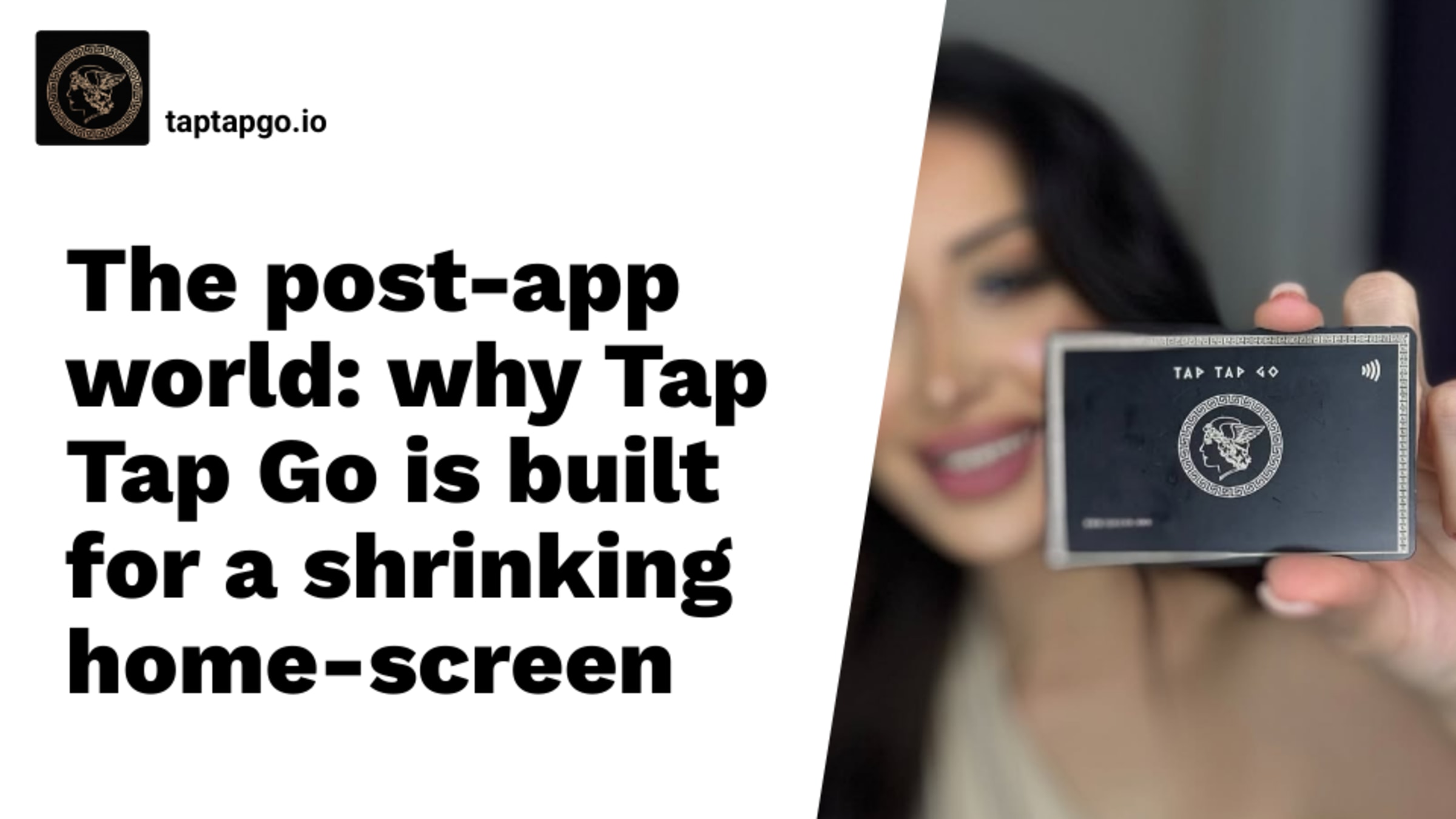
TAPTAPGO builds branded digital cards for memberships, affiliates, and loyalty programs. They live in Apple Wallet and Google Wallet — not on a home screen fighting for survival. Each card is persistent, scannable, and updatable in real time, tied to actual identity data rather than an anonymous session token.
No download required means no drop-off at the install step.
We will be direct about something: we underestimated how much conversion we were losing at the "download the app" prompt before we built around the wallet layer. That single friction point was quietly killing CPL performance we thought was a targeting problem.
Cards carry personalized offers, affiliate links, and live data — turning every member into an active, walking brand signal. One tap. No funnel gymnastics.
The Brands Winning in a Post-App World Already Made the Switch
The membership brands pulling ahead right now are not treating digital cards as a bonus feature — they are issuing them as the primary identity object from day one. That is not a subtle distinction. It is a structural commitment that changes how members relate to the brand at every touchpoint.
Affiliate programs built on card-based identity outperform link-only programs on brand recall. When your affiliate carries a branded card in their wallet, they carry your brand — not just a referral URL that expires.
The wallet layer does not compete with your notification stack. It lives below it, persistent and unburied, available the moment a member taps to use it.
Brands still anchored to app-first thinking are not just behind — they are accumulating a retention debt that will hit hard when ROAS stops masking churn. The correction is coming. The brands that already made the switch will not feel it.
The Wallet Is the New Battleground. Stop Fighting for the Home Screen.
The home screen war is over. The brands that spent five years and seven figures trying to earn a permanent slot on someone's phone lost — and the users made that call without asking anyone's permission.
The wallet layer is not a workaround. It is where persistent brand identity lives now: no install required, no notification permissions to beg for, no day-30 retention cliff to fall off of. Every tap is a brand signal. Every scan is an attribution point that actually closes.
The brands moving now are not reacting to a trend. They are wiring their membership, affiliate, and loyalty infrastructure into the layer users already trust — before the cost of staying app-first becomes irreversible.
Explore TAPTAPGO's digital card platform and build your brand identity where your audience already lives — in the wallet, not buried in an app they will never open again.
Your next best customer already has your card slot waiting. It just needs your brand in it.