
Tap Tap Go and the SIM-free future: identity that travels with the person, not the device
Your top affiliate just switched phones. Their membership tier is gone, their loyalty points are orphaned, and your attribution model has no idea who they are anymore. Nothing crashed. No one made an error. The device changed — and your entire identity infrastructure went with it.
SIM-free identity means a person's membership status, loyalty tier, and brand credentials exist independently of any phone, number, or hardware. It travels with the human, not the handset.
Here is the honest admission the industry needs to hear: we built loyalty programs around devices because devices were measurable. Phone numbers were stable identifiers. App installs gave us hooks. It was convenient architecture — until it wasn't. Every carrier migration, every hardware upgrade, every broken app install quietly bled retention numbers that no re-engagement campaign ever fully recovered.
The shift to eSIMs and Wi-Fi-first connectivity did not create this problem. It just made it impossible to ignore.
Identity anchored to a SIM is identity with an expiration date.
The SIM-Free Future Means Your Identity Can't Be Held Hostage by a Device
Connectivity is moving fast — eSIMs, Wi-Fi-first authentication, and device-agnostic access are already standard across enterprise and consumer hardware. The physical SIM card is not disappearing quietly; it is being made irrelevant by design.
Most loyalty and membership programs never got that memo. They are still built on phone numbers, app installations, and device identifiers — all of which break the moment a customer switches hardware. That is not a UX problem. That is a brand equity hemorrhage.
Every dropped identity is a dropped attribution. Every dropped attribution is a customer your re-engagement campaigns cannot find.
Device-dependent identity dies with the device. Person-centric identity travels through any network, any hardware, any context — because it belongs to the person, not the phone.
Identity anchored to a SIM is identity with an expiration date.
Digital Brand Cards Are the Infrastructure Layer the SIM-Free Era Demands
A digital brand card is not a graphic or a novelty. It is a persistent, portable identity object — carrying membership status, affiliate credentials, loyalty tier, and brand identity in a single verifiable record that lives with the person, not the hardware.
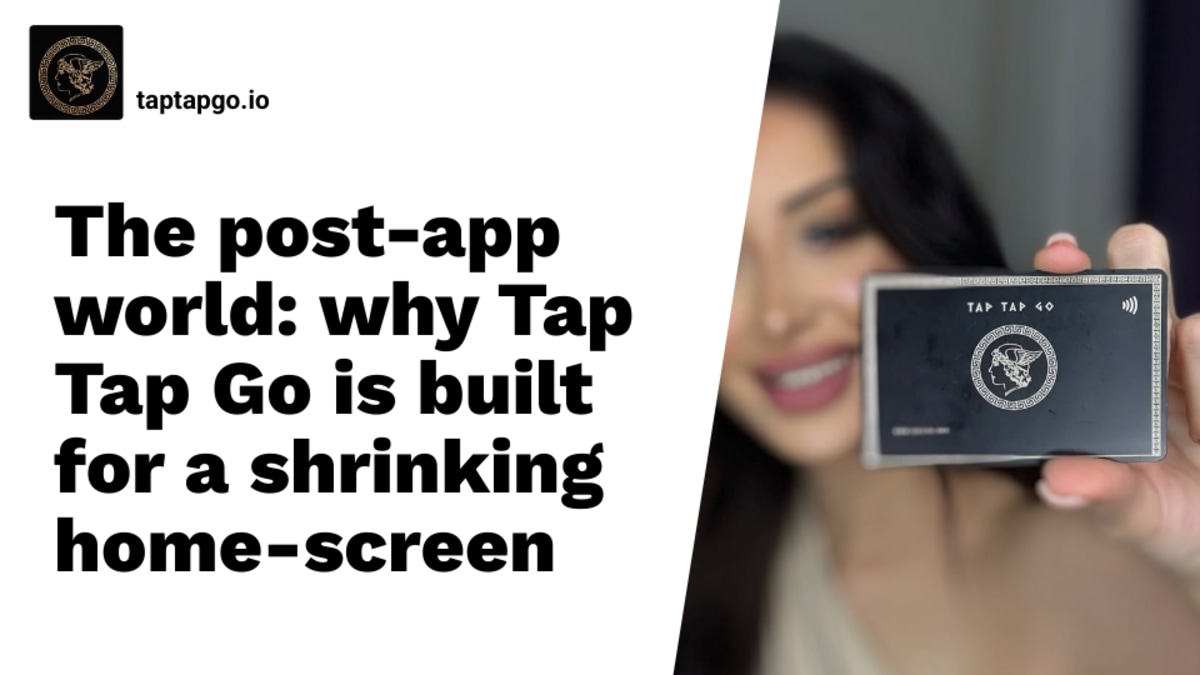
TAPTAPGO virtual cards are built on exactly this logic. The card travels across devices because it is anchored to the person's identity, not their phone's SIM slot.
That same card works on mobile, desktop, wearable, or a shared device. When identity is persistent, re-engagement campaigns have a real target. When it's device-bound, attribution modeling collapses mid-funnel and your CPM spend evaporates with it.
One card. Every device. No dropped connections.
Person-First Identity Changes How Brands Build Loyalty and Affiliate Programs
The old loyalty model rewarded device activity. A customer upgraded their phone, their session history vanished, their tier reset, and your retention metrics absorbed the hit without anyone calling it what it was: an infrastructure failure.
Person-first identity fixes the attribution chain. Every interaction — regardless of device, network, or channel — maps back to the same persistent identity object. Your CPL math changes immediately. Acquiring a member once and retaining them across three hardware cycles costs a fraction of re-acquiring them after each identity break.
We have seen this failure at scale. Brands that anchored affiliate credentials to phone numbers watched their entire affiliate networks collapse during carrier migrations. Not a gradual fade — a hard cut. Every commission link orphaned overnight.
The brands winning on retention aren't running more re-engagement ads. They built identity that doesn't break.
Building for the SIM-Free Future Starts With the Card, Not the Campaign
Most marketing teams fund campaigns before they fund identity infrastructure. That is the wrong order, and the attribution data proves it every quarter.
A campaign without persistent identity behind it burns CPM budget that attribution modeling can never fully recover. The click happened. The person moved on. You have no anchor.
TAPTAPGO flips that sequence. Build the card first, establish the identity layer, then run campaigns that attach to something permanent. Every campaign after that reinforces the same identity object instead of generating a disposable interaction that disappears when a device does.
Your funnel conversion problem might not be your funnel. It might be that your brand has no persistent identity underneath it.
The Infrastructure Decision Is Already Being Made — With or Without You
The SIM-free future is not arriving on a roadmap you can defer to next quarter. It is happening in the background of every device swap, every carrier migration, every customer who reinstalls your app and finds their loyalty tier gone. Brands are not choosing between the old model and the new one. They are choosing between building person-centric identity intentionally or absorbing the loss silently.
Every campaign you run without persistent identity underneath it is spend you cannot fully account for. Attribution modeling cannot recover what was never anchored. CPL numbers look acceptable until you realize you are re-acquiring members you already paid to convert.
Build your digital brand card with TAPTAPGO today. Establish the identity layer first — then let every campaign reinforce something permanent instead of creating another disposable interaction.
The brands that win the next five years will not be the ones who ran the most ads. They will be the ones who built identity that outlasted the devices their customers carried.