
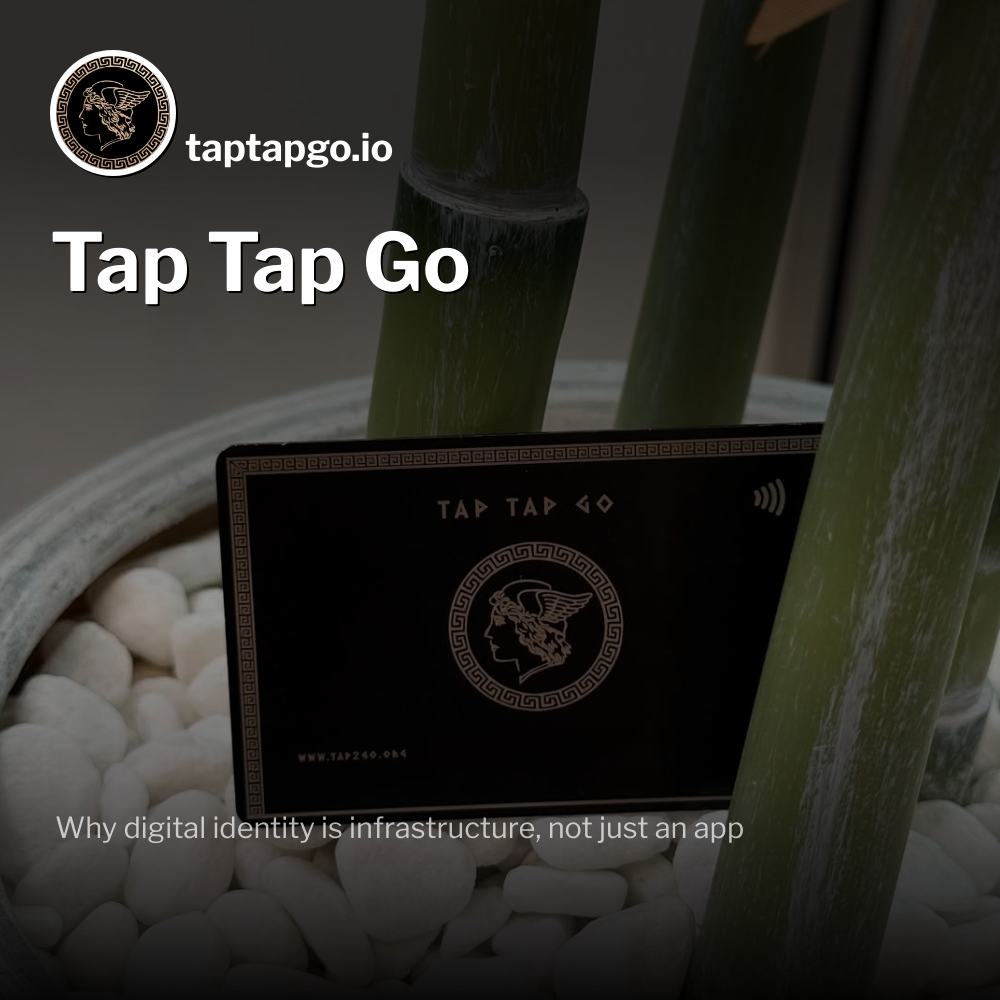

Tap Tap Go: Why digital identity is infrastructure, not just an app
We live in an era of digital fragmentation. To navigate a single day, the average professional might switch between a banking app to check funds, a wallet app to make a payment, a social platform to message a colleague, and a separate ticketing tool to enter a conference. Each interaction requires a different login, a different verification process, and a different interface.
This is the problem with treating digital tools as isolated islands. We have become dependency-heavy, relying on disconnected platforms that do not speak to one another. The solution is not to build another application to manage these tools. The solution is to build a unified layer that sits beneath them.
This is the core philosophy behind Tap Tap Go. It is not designed to be just another icon on your home screen; it is built as a global access infrastructure. By combining identity, financial transactions, and access control into a single physical and digital credential, Tap Tap Go is changing the way we move through the digital and physical world.
The concept of digital identity as infrastructure
To understand why Tap Tap Go is distinct from standard networking or payment apps, we must look at the difference between a tool and infrastructure. A tool is something you pick up to perform a specific task—like sending an email or checking a stock price. Infrastructure is the underlying system that allows those tasks to happen—like the internet itself or the power grid.
When digital identity functions as infrastructure, it ceases to be a static profile page. Instead, it becomes a dynamic, unified layer that triggers multiple actions simultaneously. With a single tap, Tap Tap Go communicates who you are, how you transact, where you belong, and what you are allowed to access.
This functions quietly in the background. Users do not need to manage these features actively; they simply move through the infrastructure. Whether it is entering a verified event, making a gas-free payment, or sharing a professional portfolio, the 'plumbing' of the transaction is handled by the identity layer. It removes the friction of jumping between apps, offering a seamless experience where identity and capability are one and the same.
A unified ecosystem: Key features and functionality
Tap Tap Go supports this infrastructure model through several key pillars that integrate financial rails, networking verification, and access control.
The unified access layer
At the heart of the system is the physical credential—available in premium finishes like 24K gold or platinum—equipped with NFC technology. This card acts as a secure key. However, unlike a standard bank card which only facilitates payments, or a business card which only shares data, this credential triggers a distributed network. It connects to banking systems, loyalty programmes, and digital asset marketplaces simultaneously.
Go Cash and borderless finance
A major component of this infrastructure is the financial layer. Tap Tap Go integrates Go Cash, a USDT-pegged stablecoin. This allows users to conduct gas-free transactions within the community.
By integrating directly with licensed partner APIs for SWIFT, SEPA, and IBAN issuance, the platform is building a borderless financial access layer. This means users can transact globally without the friction, delays, or exorbitant fees associated with traditional banking silos. The system is designed to handle everything from micro-transactions (earning rewards per tap) to high-value corporate settlements.
The Events and Loyalty Engine
Infrastructure must also account for physical presence. The Tap Tap Go roadmap includes a native events layer where the digital identity acts as an entry pass. Users can discover global events, register using their profile, and gain access via their card.
This is tied to an enterprise-ready loyalty engine. Because the system tracks valid interactions—such as card taps, referrals, and marketplace activity—users earn rewards organically. It turns passive participation into an active, rewarding ecosystem.
Why infrastructure beats fragmentation: The benefits
Moving from an app-based mindset to an infrastructure mindset offers tangible benefits for users and businesses. The primary advantage is the elimination of redundancy.
Simplified Access: Currently, proving your identity and your ability to pay are two different processes. Tap Tap Go merges them. A single tap can verify credibility and execute a transaction. This "correct access" model ensures that interactions are verified and secure without requiring the user to jump through administrative hoops.
Enhanced Security: By centralising digital identity into a secure infrastructure layer, users gain better control over their data. Features like the tiered KYC (Know Your Customer) system ensure that higher-value transactions and access privileges are reserved for verified users. Furthermore, digital assets, including NFTs and crypto, are protected within a secure vault with advanced encryption, reducing the risk of fraud common in fragmented, lower-security apps.
Global Reach: Apps often struggle with regional restrictions. Infrastructure is designed to be universal. Whether facilitating remittances to emerging markets like Africa and the Middle East or enabling networking in New York, the rail remains the same. The remittance engine reduces fees to near zero, solving a critical pain point in the global economy.
Real-world applications: Putting infrastructure to work
How does this look in practice? The versatility of Tap Tap Go allows it to serve various sectors effectively.
For the global professional
For entrepreneurs and freelancers, Tap Tap Go acts as a portable headquarters. It is a digital business card that instantly shares a verified portfolio, collects leads, and even accepts payments for services via a built-in storefront. The AI-powered networking assistant suggests who to connect with and when to follow up, turning a passive contact list into an active opportunity engine.
For corporate enterprise
Businesses can deploy Tap Tap Go as a comprehensive management tool. It streamlines expense management by tracking team spending in real-time. Companies can issue branded cards to employees, which serve as building access keys, digital business cards for client meetings, and corporate expense cards—all in one.
For event organisers
Organisers of conferences or festivals can utilise the infrastructure to manage the entire attendee lifecycle. From issuing digital tickets to controlling VIP access areas and facilitating cashless payments for merchandise on-site, the entire event ecosystem runs on a single rail.
The future is connected
We are moving past the age of "there's an app for that." We are entering the age of connected infrastructure. The separation between our digital assets, our professional identity, and our financial tools is artificial and inefficient.
Tap Tap Go represents a shift towards a cohesive digital existence. By building a layer that handles identity, finance, and access simultaneously, it offers more than just convenience—it offers capability. It is not about accumulating more connections; it is about ensuring those connections are verified, valuable, and seamless. It is one card, one infrastructure, keeping everything in motion.
Meta data
Meta title
Tap Tap Go: Why digital identity is infrastructure, not just an app
Meta description
Discover how Tap Tap Go is replacing fragmented apps with a unified global infrastructure for identity, finance, and access. One card, total connection.