Tap Tap Go for art fairs: collector profiles meet artist portfolios
A collector walks out of your booth on Saturday afternoon with a tri-fold brochure, a PDF link they will never open, and a name they cannot quite place by Sunday evening. They met 40 artists that weekend. You were one of them.
Digital cards solve the art fair identity problem by replacing passive handouts with a scannable, branded profile — one that holds a full portfolio, live pricing, and contact details, and stays in the collector's wallet app long after the fair ends.
Here is the honest admission the art world needs to hear: even the most design-conscious galleries at top-tier fairs are running their collector touchpoints on infrastructure built for a trade show in 2009. Paper. PDFs. A clipboard by the entrance. We have seen brand-forward events spend six figures on booth design and then hand a serious collector a business card with a Gmail address on it.
The first impression survives. The follow-up infrastructure does not.
That gap — between the moment of connection and the moment of purchase — is exactly where artist revenue disappears. And it is entirely fixable.
Why Art Fair Brand Identity Breaks Down Before the Collector Leaves the Booth
A serious collector walks Art Basel Miami and meets 47 artists in two days. By Sunday night, they remember three names — maybe four. The other 43 booths blurred into a single impression of framed work and rehearsed pitches.
Paper portfolios do not follow people home. PDF links go unopened. Neither creates a persistent brand touchpoint — they are handouts, not infrastructure.
Your brand equity built at the booth evaporates within 48 hours without a digital anchor.
The real ICP failure here is infrastructure mismatch. Artists are pitching serious, high-intent collectors using tools designed for casual foot traffic. That gap is not a messaging problem. It is a brand identity problem.
How Tap Tap Go for Art Fairs Turns a Portfolio Into a Living Collector Experience
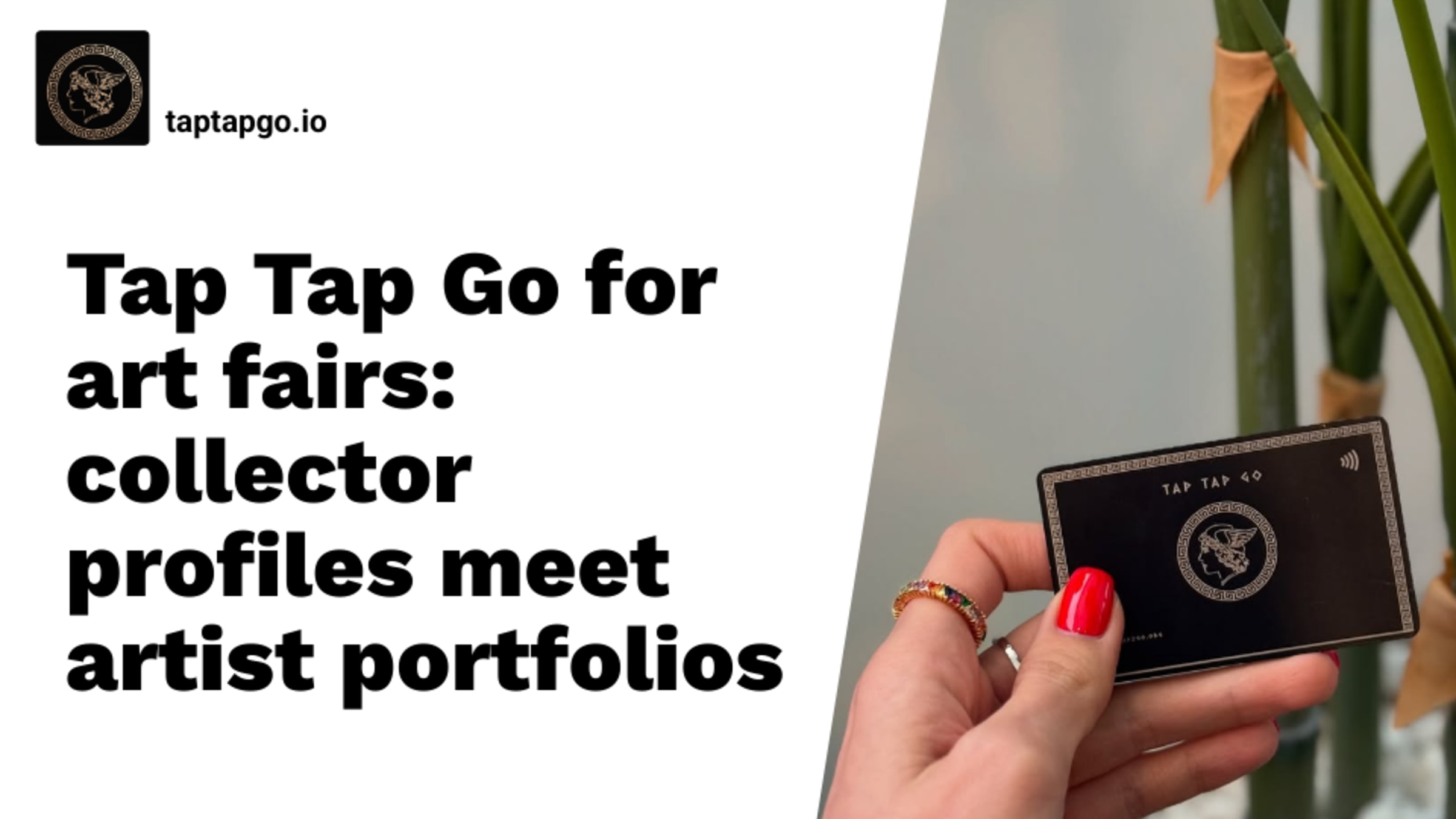
Most artist cards hand a collector a starting point and nothing else. TAPTAPGO turns that card into the full conversation — portfolio, bio, pricing tiers, and contact details, all in one scannable identity a collector carries in their wallet app.
This is not a link dump. It is a branded experience with the artist's visual language built in.
When a new series drops or a piece sells, the card updates automatically. No reprints, no stale PDFs, no "sorry, that one's gone." The collector always sees the current work.
That is the difference between a handout and a brand asset that compounds.
Collector Profiles at Art Fairs: The Data Most Galleries Are Ignoring
Most galleries leave Art Basel or Frieze with a stack of business cards and a clipboard. That is not a collector profile — that is a forgetting pile.
When a collector taps a TAPTAPGO card, you capture intent data tied to a real digital identity: what they viewed, when they engaged, what tier of interest they signaled. That is not contact info. That is pipeline intelligence.
Omnichannel follow-up becomes executable the moment that first tap happens. Email, SMS, private previews — all anchored to one collector identity across every fair cycle.
Galleries running digital profiles close faster and retain buyers longer. The pattern is consistent: persistent digital identity at the first touchpoint compounds into repeat purchases. Manual data collection does not.
Building a Loyalty Infrastructure for the Art World With Tap Tap Go
The art world has no loyalty infrastructure. Serious collectors spend six figures across fair cycles, and most galleries reward that relationship with nothing more than a mailing list.
TAPTAPGO cards support tiered collector memberships — preview access, first-purchase priority, exclusive studio visit invitations — all tied to a single scannable identity. The relationship does not end when the fair closes. It compounds.
The card is not an introduction. It is the beginning of a trackable, durable collector relationship that most of your competitors are not building yet.
The Fair Ends. The Relationship Doesn't Have To.
Every art fair is a compressed brand-building moment — two days, forty artists, hundreds of collectors, and almost no infrastructure to carry any of it forward. Most artists and galleries walk away with a stack of business cards and a vague sense of momentum. Within a week, that momentum is gone.
The collectors who loved your work on Saturday cannot find you by Tuesday. That is not a sales problem. That is a brand infrastructure problem.
The artists and galleries that win across fair cycles are not necessarily the most talented. They are the most connected — digitally, persistently, and on the collector's terms. A card that lives in a wallet app, updates in real time, and anchors a loyalty relationship does not expire when the booth comes down.
Build your TAPTAPGO digital card before your next fair — not after. Go to taptapgo.com, set up your artist or gallery card, and walk into your next booth with a brand infrastructure that actually holds.
The art stays on the wall. Your brand should stay in their pocket.